
Greta Gerwig’s “Barbie” jokes about, but doesn’t ultimately challenge, Mattel’s complicity in upholding the Malibu Barbie version of the world, LangeAlexandra writes.
,” says, “but, in reality, the racial diversity of the Barbie character wasn’t there yet.” Goldberg’s book describes how toys became political during the sixties and seventies—from Lionel Corporation’s toy trains’ embrace of anti-violence rhetoric to wooden figurines that allowed children to assemble families more complex than a husband, wife, and two kids.
American culture was convulsed by Vietnam War protests, Title IX disputes, and the Equal Rights Amendment debates, and toys were enlisted in the fights for empowerment and equity by women and people of color. Gerwig’s film builds upon, but only occasionally acknowledges, sixty years of attempts to use the popularity of Barbie to advance a more complex agenda than sun, fun, and lots of pink. That’s too bad, both for the historical record and for the new buyers of Barbie that the film’s success will attract. As Goldberg writes, the nineteen-sixties forced toy-makers “to publicly reckon with, perhaps for the first time, their status as entrepreneurs of ideology.”, with modern furniture and a single bed. It had no kitchen, no room for a family, and no room for Ken. Part of the original radicalism of Barbie was that girls could use her to act out fantasies of being something other than mothers. The inventor of Barbie, Ruth Handler, said she was inspired by watching girls play with paper dolls of adult women; shrewdly, she saw a hole in the toy market for a doll who could stand, however precariously, on her own two feet. Gerwig’s film opens with an,” in which little girls clad in trad-wife aprons smash their baby dolls, liberating themselves from playing house. In 1968, Mattel made a more dramatic move. As Goldberg recounts, the civil-rights activists Robert Hall and Lou Smith, leaders of Operation Bootstrap, a Black economic-development organization founded in the wake of the Watts riots and based in South Central Los Angeles, were invited to meet with the Mattel president, Elliot Handler, and other executives at company headquarters. They were the only Black people in the room in Hawthorne, California, which was historically. Black consumers were seen as a growing part of the toy market, and, by the late sixties, most companies had at least one Black doll. In 1968, Mattel was the first company to introduce a Black fashion doll with its own character and name: Talking Christie, Barbie’s friend, who said things like, “Let’s go shopping with Barbie.” Partly as a result of an influential study, Black families were encouraged to buy their children Black dolls. In the nineteen-forties, the psychologists Kenneth and Mamie Clark performed a series of which, in their interpretation, demonstrated the preference of even young Black schoolchildren for white dolls. This theory of “damage psychology” was popularized in mainstream publications such as, which, during the next decade-plus, published numerous images of playrooms full of developmentally appropriate toys, including dolls. At one point, the magazine urged parents to consider: “Do the toys contribute to [your child’s] physical, emotional, intellectual, spiritual and social growth, or do they stunt his development by implying that only white is beautiful?” The Clarks’ research would be cited in footnote 11 of the Supreme Court ruling inas an example of the harms that segregation inflicted on the “hearts and minds” of Black children. Mattel saw its talks with Operation Bootstrap as an opportunity to help the local Black community develop professional skills rather than just treat the demographic as a new market. Sponsoring a company that would create “brother and sister dolls made by brothers and sisters,” a tagline under which Operation Bootstrap’s dolls would eventually be sold, was also a shortcut to the kind of “authenticity” in facial features, hair texture, and clothing that doll buyers had begun to expect. Mattel offered to finance a new toy-manufacturing operation in South Central, owned and operated by Operation Bootstrap as a community-development project alongside the organization’s existing clothing-and-textile-import businesses. Mattel would donate training and equipment, but Operation Bootstrap would design, distribute, and profit from the dolls. And thus Shindana Toys was born. The dolls that Shindana produced in South Central from 1968 to 1982 came to include Baby Nancy, with a face modelled after a local six-year-old and sketches by neighborhood high-school students; Malaika, a fashion doll with natural hair and “Afro-print” clothing like that sold at Operation Bootstrap’s boutiques; and Wanda Career Girl, initially sold in nurse, ballet-dancer, and stewardess iterations, with a booklet that included pictures and first-person narratives of real women describing their work. In 1972, when Wanda was introduced by Shindana, Mattel’s top seller was Malibu Barbie, “a young teen whose main interests were surfing, dating, driving sports cars, and enjoying the relaxed life of a middle-class extended childhood,” as Goldberg writes. Though Barbie had become a career girl in the early sixties—the company had even introduced Astronaut Barbie in 1965 at the height of the space race—no new career Barbies were released between the mid-sixties and the early nineteen-seventies. Wanda’s career orientation, Goldberg writes, “affirmed the burgeoning Black feminism of the time,” going further than any white manufacturer or white doll in the early nineteen-seventies. Wanda proved so popular that girls started writing in, and Shindana created a Wanda Career Club with a monthly newsletter. As Shindana’s dolls took off, Mattel followed their lead, putting its World of Barbie dolls in dashikis and, in 1973, reintroducing career Barbies—such as Surgeon Barbie and Olympic Skier Barbie—some of whom are name-checked in Gerwig’s film. Shindana was also the first toy manufacturer to introduce a multiethnic doll line: the large vinyl dolls known as Little Friends, launched in 1976, included Hispanic and Asian dolls. Mattel finally got around to starting its own multiethnic line in 1980, launching “Dolls of the World” collection—including costumed “Oriental Barbie,” which had long black hair, a red mandarin-collar jacket, and a fan, and “Hispanic Barbie,” which had long black hair, a black lace shawl, and a choker with a red blossom. Gerwig makes room for Barbie lawyers, judges, and writers, and briefly shows the designer of all those Dreamhouses: Architect Barbie. As the professor of architecture and feminist scholar Despina Stratigakos describes in her 2011
Singapore Latest News, Singapore Headlines
Similar News:You can also read news stories similar to this one that we have collected from other news sources.
 What are the trending searches about Barbie? - KRLD NewsQuestions about the cast of Barbie top Google's list oftop trending searches for the month of July. When Americans headed over to Google.com here were the top trending search questions on Barbie: 1. Is Billie Eilish in the Barbie movie? 2. Is Shay Mitchell in Barbie? 3. Is Karol G in the new Barbie movie? 4. Is Barbie a musical? 5. Is Dua Lipa in Barbie? 6. Is Nicki Minaj in the Barbie movie? 7. Who is in Barbie? 8. Where is the Barbie premiere? 9. Is Issa Rae in the Barbie movie? 10. Is the Barbie movie appropriate for kids? And when it comes to the top trending questions about Christopher Nolan's Oppenheimer: 1. Where to watch Oppenheimer 70mm imax? 2. What did Oppenheimer die of? 3. Is there CGI in Oppenheimer? 4. When does Oppenheimer open? 5. What is Oppenheimer film about? 6. How should I watch Oppenheimer? 7. Where to see Oppenheimer? 8. Is there nudity in Oppenheimer? 9. How long is Oppenheimer movie? 10. Who is playing Oppenheimer? KRLD's John Liddle talked with Google Trends expert Elizabeth Howard about 'Barbenheimer' and other big trending themes through July. Image: Mark Makela / Contributor Getty Images
Read more »
 The 'Barbie' Movie Is Ending Relationships Left And Right'I really didn’t even recognize how he was perceiving it until he asked, ‘Are you crying?’ two or three times throughout.'
Read more »
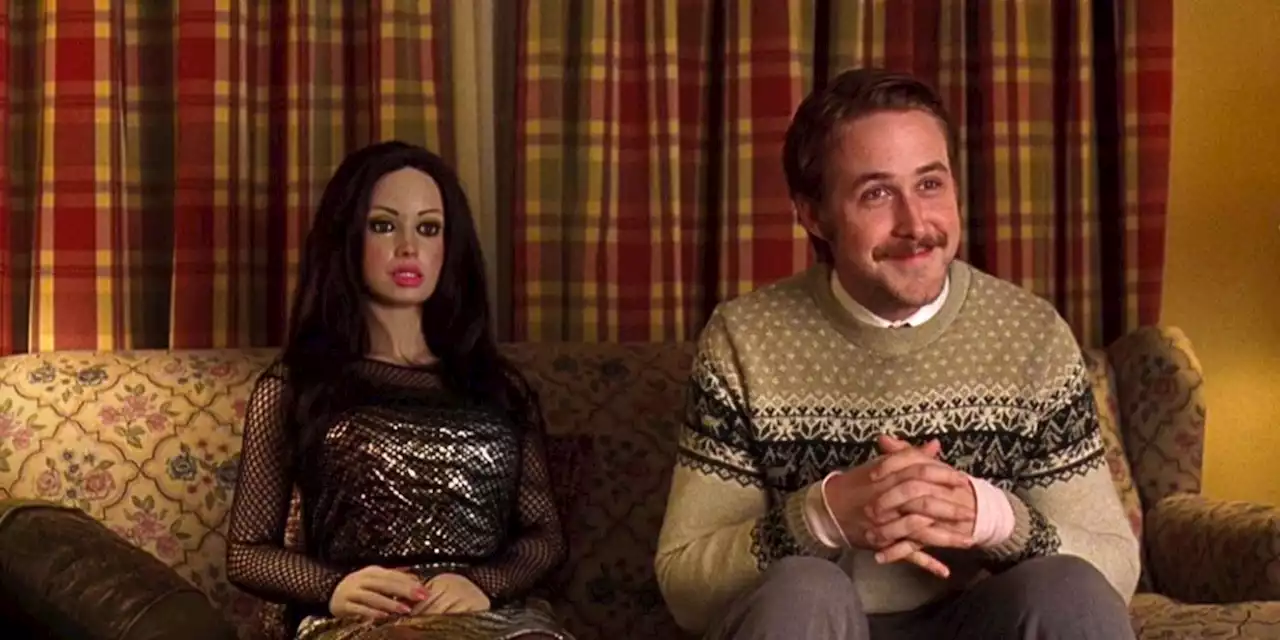 Barbie Parody Poster References Ryan Gosling's Other Plastic Doll MovieA Barbie parody poster references Ken actor Ryan Gosling's other acclaimed movie that involves a plastic doll and shares some similar themes.
Read more »
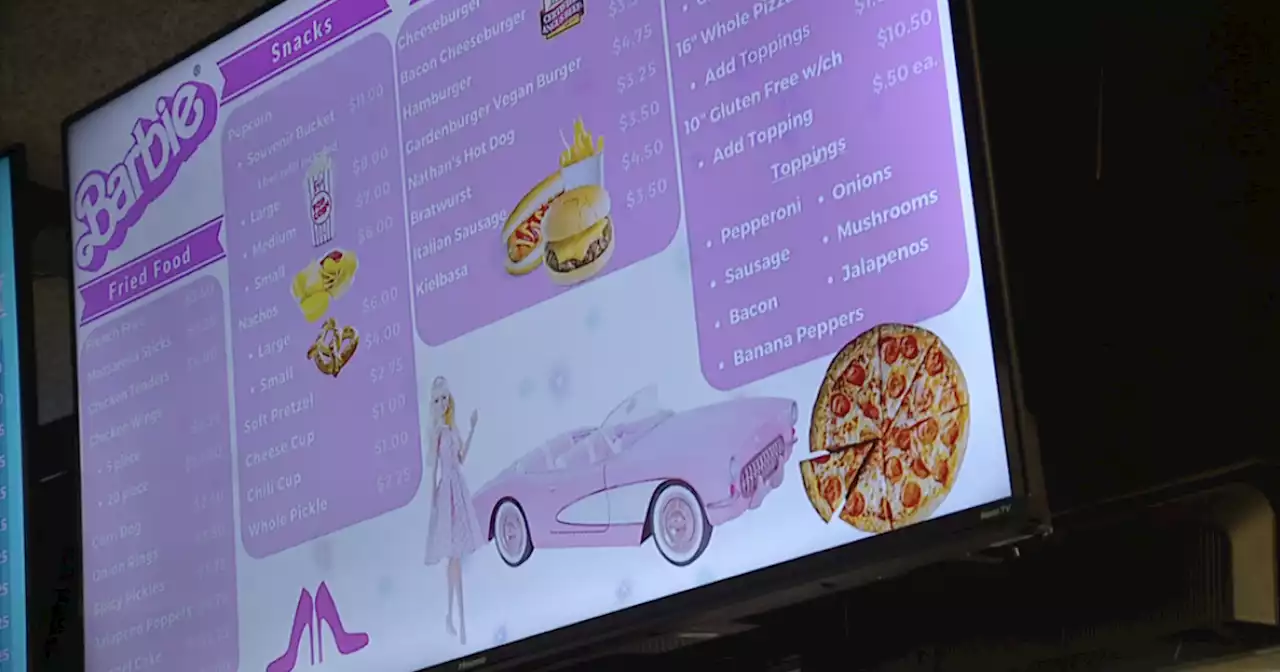 Barbie movie brings big boom to drive in movie theatersAs movie theatres continue to close across the US in North Ridgeville one drive-in movie theatre has been holding on and Barbie has only brought in more business.
Read more »
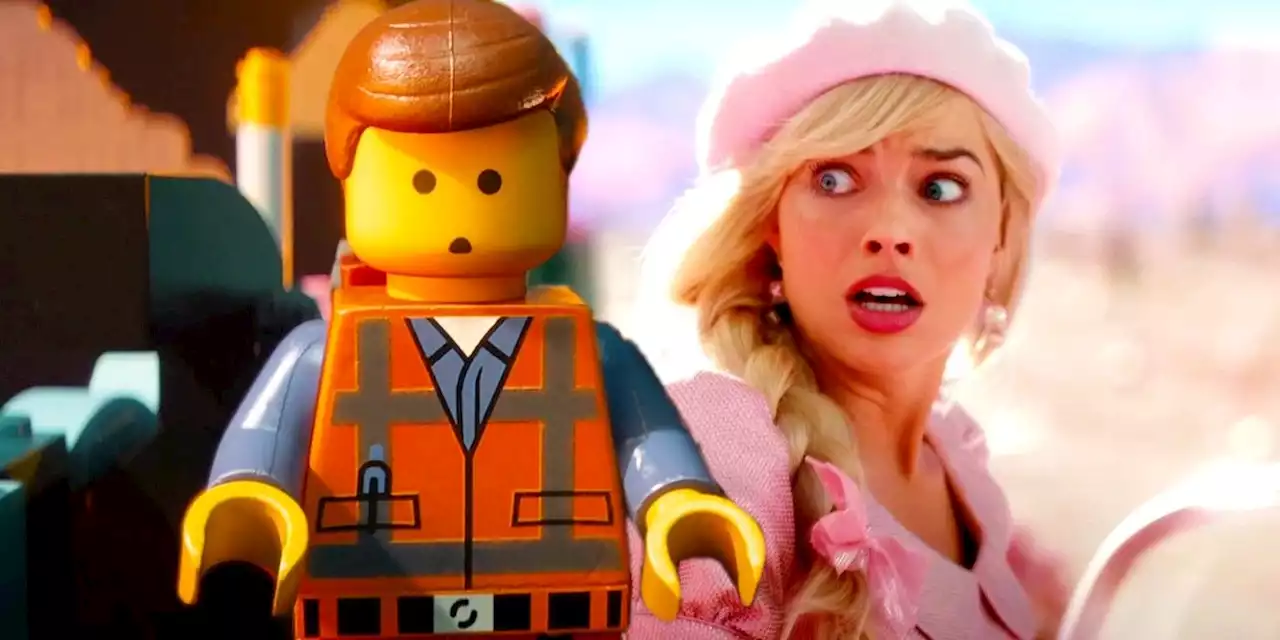 Brilliant Barbie/LEGO Movie Theory Gets Endorsement From Original DirectorThe Lego Movie director Chris Miller weighs in on a very popular Barbie fan theory due to the similarities between the toy-centered movies.
Read more »