
At August’s Pacific Islands Forum in Tonga, regional leaders warned against the “severe manifestation” of climate change, as new data about sea level rise coincides with a concerted political push to raise it on the global agenda.
Pacific island nations call for greater focus on sea level rise as UN and experts warn of urgent global threatPacific island nations call for greater focus on sea level rise as UN and experts warn of urgent global threat At August’s Pacific Islands Forum in Tonga , regional leaders warned against the “severe manifestation” of climate change , as new data about sea level rise coincides with a concerted political push to raise it on the global agenda.
A resident cycles along the coastline of Tuvalu, one of the first nations predicted to disappear due to the effects of climate change and rising sea levels. BANGKOK: When United Nations Secretary-General Antonio Guterres made a visit to the Pacific region back in 2019 he stood waist-deep in water for a Time Magazine cover shoot in a dramatic visual show of the threat of rising sea levels. His most recent appearance in Tonga at the annual Pacific Islands Forum , which ran from Aug 26 to Aug 30, came without the theatrics. While Mr Guterres again wanted to spotlight the concerns about island nations being inundated, analysts say this time there is a sharper focus on building real momentum and policy to tackle the issue at a global level. And it comes with the explicit backing of the Pacific bloc - the 18 member states represented in the PIF - which rather than broad messaging around the threat of climate change, honed in on sea level rise as an area of great concern. The final forum communique noted that regional leaders had discussed the “broad-ranging nature of climate change” and recognised that sea level rise is a “severe manifestation of climate change that threatens Pacific communities, especially in low-lying nations”. The leaders “agreed to elevate the issue of sea level rise politically”, including at the United Nations General Assembly and “strongly called” for the inclusion of sea-level rise as a standalone agenda item in the UNGA and other relevant UN processes. In lockstep, Mr Guterres earlier in the week had issued “a global SOS – Save Our Seas – on rising sea levels,” on the sidelines of the PIF. “This is a crazy situation. Rising seas are a crisis entirely of humanity’s making. A crisis that will soon swell to an almost unimaginable scale with no lifeboat to take us back to safety,” he said. “But if we save the Pacific, we also save ourselves. The world must act and answer the SOS before it is too late.” United Nations Secretary-General Antonio Guterres poses for a photo with Tongan youth after a visit to Hihifo, an area affected by the volcanic eruption and tsunami in 2022, on Aug 27. Dr Meg Keen, a senior fellow in the Pacific Islands Program at the Lowy Institute, said it was no coincidence that Mr Guterres had decided to once again visit the region ahead of key summits in upcoming months. These include the UN Summit for the Future in New York, running from Sep 22 to 23, designed to enhance global governance, and yearly climate negotiations at COP29 in Azerbaijan from Nov 11 to 22. “It is a way of putting political pressure on the system. He's trying to build momentum and it has helped in the past to put a spotlight on countries whose very existence is at stake,” she said. “And he's trying to build that momentum in every tangible way, and it's just not in the Pacific. This is pretty critical here, but it's critical for you too, and I think that's why he's trying to make it as tangible as possible. “These are about real people, real places. This is newsworthy, and this is a global issue. And so he’s saying the Pacific exemplifies why we need to act.”The joint offensive on sea level rise comes in the wake of a new technical report from the UN, released on Monday, showing that it could be happening faster than previously thought. The technical briefing combined previous findings and new science to give a global status update, highlighting the Pacific region as particularly vulnerable. It found that tides between 1990 and 2020 had risen 21cm in Nuku'alofa, the Tongan capital playing host to the PIF, a rate nearly twice the global average. The global sea level change recorded in 2023, relative to 1993 levels, was the highest ever in modern times, dating back to the 19th century. It has also been accelerating faster than any period over the past 3,000 years. “Because of sea level rise, the ocean is transforming from being a lifelong friend into a growing threat,” the UN’s World Meteorological Organization Secretary-General Celeste Saulo told reporters in Nuku’alofa, Tonga, on Tuesday. The main causes of the phenomenon are well known - primarily the melting of land ice and the expansion of seawater as it warms. In the latest report, scientists released new findings based on studies of ice melt dynamics. “They have a lot more information now on understanding the types of tipping points, the ice structure itself, which is its own set of science, when these ice sheets could break off, when this melt would occur, and where this fits into the projections we have,” said Dr Rosanne Martyr, a senior scientist at Climate Analytics and a reviewer of the report. Current climate policies and action have the world on track for 2.7 degrees Celsius of warming by the end of the century. Under that scenario, sea level rise of 20cm above 2020 levels could occur by 2050 and 56cm by the end of the century. It would mean devastating impacts for low-lying areas, with most of the Pacific’s islands and atolls only a couple of metres above sea level. Ninety per cent of Pacific Island people live within 5km of the coast. “They do feel the largest impact and so they use their voice to push the levers where they can, and that important lever is on emissions. It's only going to get worse if we don't do more to reduce our emissions,” said Dr Martyr. Dr George Carter, co-director of the Australian National University Pacific Institute said the most vulnerable nations - among them Tuvalu, Kiribati and the Marshall Islands - were the ones spearheading the concerted effort at the PIF and in other forums to lift sea level rise on the global agenda. Their respective governments have shown concern about the lack of policy, funding and research put into sea level rise, he told CNA from Tonga. “While you have projects that focus on forestry and focus on disasters in terms of responding to cyclones through humanitarian services, you don't necessarily have programmes or projects that focus on sea level rise,” he said.Children play near Tuvalu's shoreline. The nation and its communities have been fighting the increasingly urgent impacts of climate change. Recently, CNA ran a three-part series, diving into the Pacific islands’ fight against climate change, zoning in on the struggles and resilience of communities in Tuvalu is forecast to be among the first countries in the world to disappear, due to the rising tides that bite away at its fragile coast. Some 95 per cent of the capital city Funafuti is expected to be flooded on a daily basis by the end of the century, leading the government to openly consider climate migration options for its people. On some islands in Kiribati, sea level rise is four times greater than elsewhere, a situation that led to the former administration making a purchase of a large piece of coastal land in Fiji, laying physical foundations for moving the entire population. Its current government has pivoted away from a “migration with dignity” policy and now aims to adapt to the perilous situation. “It's not because of just what's happening right now. It's a build-up for many years,” said Dr Carter. “We've heard so many statements by Pacific leaders, and moreover, you hear it in the stories, the lived experience of people. This is now beyond adaptation. This is lost land.” He said that regional leaders were “really pushing” to have a permanent form of agenda within the UN General Assembly related to sea level rise. “What it means is that every year, the UN bodies would have to report back into what activities and new activities there are that countries can work towards,” he said.The UN report also articulated the latest, more widespread, sea level rise scenarios for some of the world’s biggest cities and economic hubs. Megacities like Bangkok, Dhaka, Guangzhou, Jakarta, London, Los Angeles, Miami, Mumbai, New York City, Rio de Janeiro, Shanghai, and Tokyo are all listed as threatened. The frequency of coastal flooding and extreme events is projected to increase substantially in most regions. “Just because you're a big economy, that doesn't mean that you're immune to the damage,” said Dr Martyr. Still, developing nations and the economies in the Global South are most at risk and have the fewest resources to minimise the impacts. It means Pacific negotiators will remain steadfast to make progress on loss and damage mechanisms and adaptation funding later in the year at COP29, Dr Keen said. “They are continually pushing this envelope and trying to say that this is a geopolitical global issue. You have a responsibility to us to act otherwise our very survival is at stake,” she said. “Guterres has been trying to highlight that we are like the canaries in the coal mine. We're on the front line, but you're not far behind us and that's why you need to act.” Fight or Flee: Tuvalu’s residents prepare for mass displacement as nation forecast to be among first to disappear due to climate change We know it's a hassle to switch browsers but we want your experience with CNA to be fast, secure and the best it can possibly be.
Fiji Tuvalu Tonga Climate Change Sea Level
Singapore Latest News, Singapore Headlines
Similar News:You can also read news stories similar to this one that we have collected from other news sources.
 Philippine sovereign wealth fund eyes powering off-grid islands, for startersThe Philippine sovereign wealth fund is prioritising energy security and digital connectivity for its first investments in 2024.
Read more »
 Philippine sovereign wealth fund eyes powering off-grid islands, for starterspThe Philippine sovereign wealth fund is prioritising energy security and digital connectivity for its first investments./p
Read more »
 'Very strong' Typhoon Ampil buffets Japan's Pacific coastThe typhoon comes as Japan marks the "obon" holiday week when millions return to their hometowns, and days after Tropical Storm Maria dumped record rains in parts of the north.
Read more »
 Taiwan president to visit frontline islands at centre of China tensionsTAIPEI - Taiwan President Lai Ching-te will on Friday make his first visit since taking office in May to the sensitive Kinmen islands that sit next to the Chinese coast and have been the scene of stepped up tensions between Taipei and Beijing.
Read more »
 UN chief issues 'SOS' for Pacific Islands worst hit by warming oceanUnited Nations Secretary-General Antonio Guterres said on Tuesday (Aug 27) that ocean temperatures are rising in the Pacific Islands at three times the rate worldwide, and its population was "uniquely exposed" to the impact of rising sea levels.
Read more »
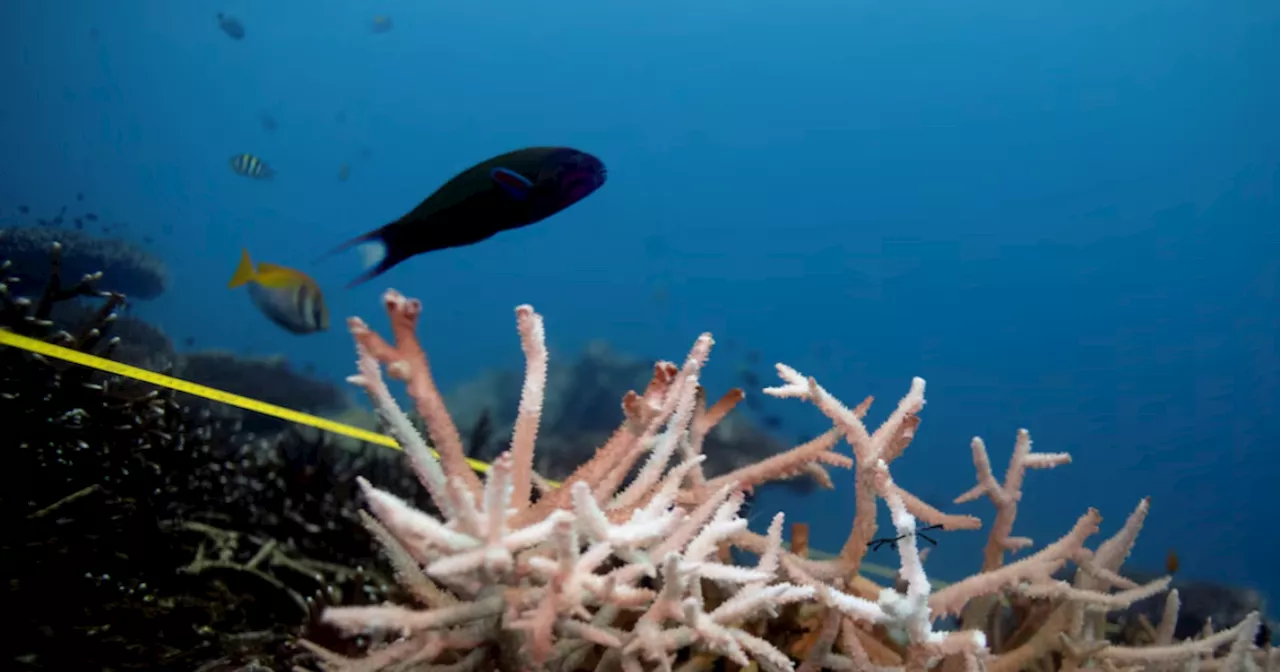 UN chief issues 'SOS' for Pacific Islands worst hit by warming oceanUnited Nations Secretary-General Antonio Guterres said on Tuesday (Aug 27) ocean temperatures are rising in the Pacific Islands at three times the rate worldwide, and its population was 'uniquely exposed' to the impact of rising sea levels.
Read more »